- official@rahathal-afiya.com
- 057 935 3970
Thai Massage in Dammam
Traditional Oil-Free Thai Massage with Assisted Stretching and Pressure Techniques
About The Therapy
Discover the Traditional Approach to Thai Massage
Traditional Thai massage combines assisted stretching, controlled pressure and guided body movements. Unlike oil-based massage, it focuses on hands-on techniques and body positioning rather than long, flowing strokes.
At Rahath Al Afiya in Dammam, we offer Thai Massage Without Oil for men interested in this traditional form of bodywork. It’s a different experience from conventional relaxation massage, particularly for those who prefer movement and stretching.
Whether you’ve tried Thai massage before or are exploring it for the first time, understanding the techniques and your own comfort level is important. Our team can explain the available service and appointment arrangements before you book.
Traditional Thai
Assisted Stretching
Targeted Pressure
Body Wellness
Key Benefits
Benefits of Traditional Thai Massage

Movement Comfort
Allows you to experience guided movement within a comfortable range.
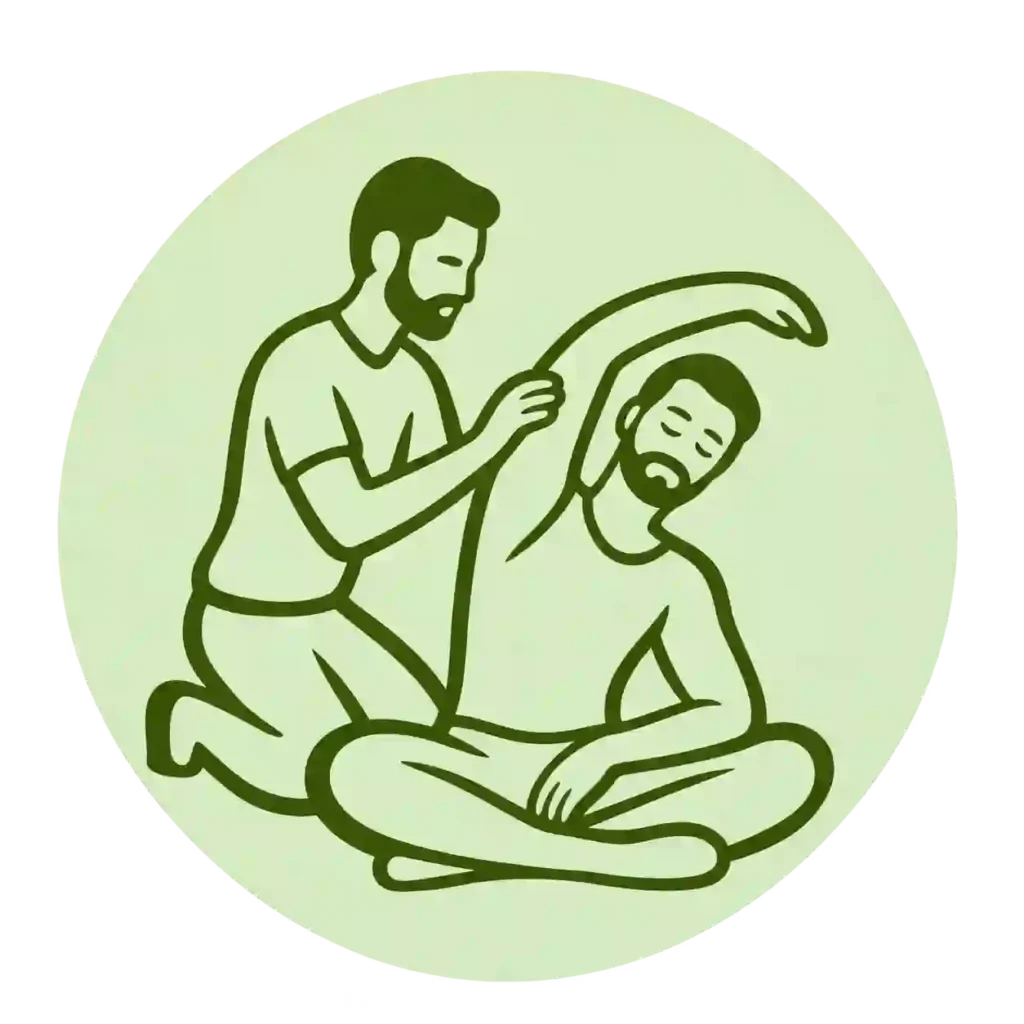
Assisted Stretching
Introduces controlled stretches with attention to your physical limits.
Muscle Comfort
May help ease tension in tired muscles and improve overall comfort.

Physical Relaxation
Offers an opportunity to unwind after a demanding routine.

Body Awareness
Helps you notice how your body responds to different movements.

Overall Wellness
Encourages time for rest, physical comfort and personal well-being.
Key Benefits
Wellness Benefits You Can Feel
Joint Comfort
Encourages relaxation around joints and surrounding muscles.
Muscle Relaxation
Helps you unwind from everyday muscle tension.
Muscle Comfort
Focuses on comfort around stiff and tense muscles.
Physical Relaxation
Offers a calming experience after demanding daily activities.
Stress Relief
Helps you slow down and ease everyday tension.
Mind & Body Wellness
Encourages relaxation and a sense of overall well-being.
Understanding Thai Massage
What Is Traditional Thai Massage?
Thai massage is a traditional bodywork practice from Thailand that combines controlled pressure, assisted stretching and guided movements. It’s sometimes called Thai yoga massage because certain techniques resemble yoga stretches.
Unlike oil-based massage, traditional Thai massage is generally performed without oil. Instead of long, flowing strokes, the therapist uses pressure and guided movements to work with different muscle groups.
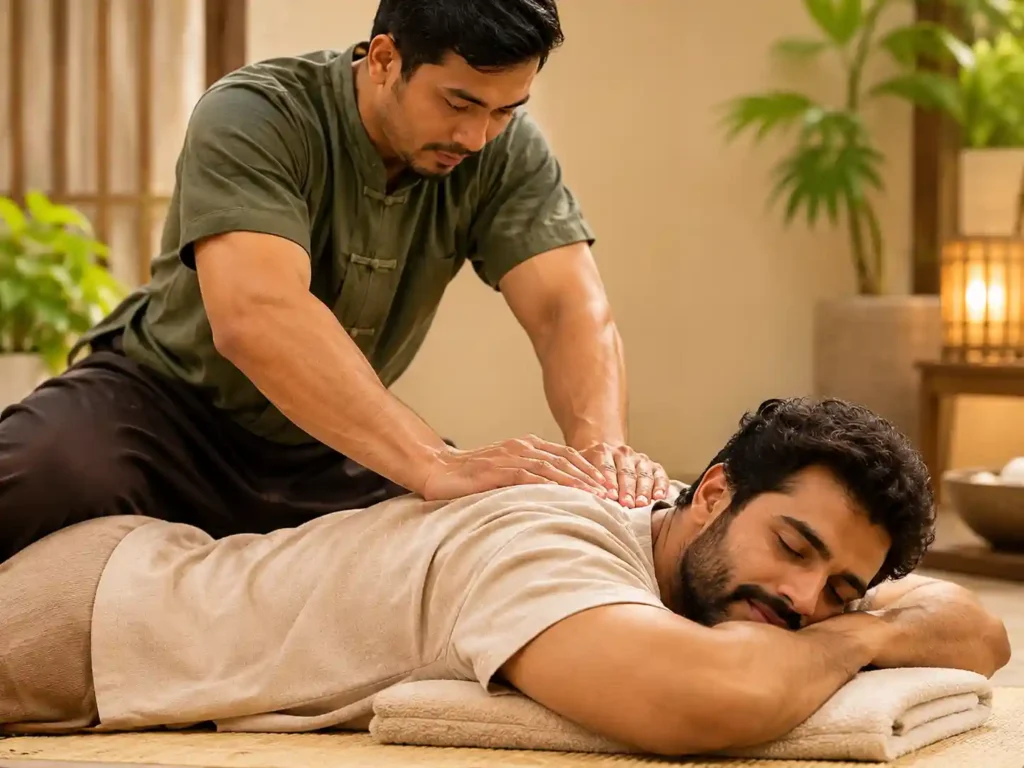
Classical Thai massage is commonly performed over loose clothing on a padded mat. Depending on the technique, the therapist may use their hands or forearms to apply pressure and guide stretches.
One of its distinctive features is assisted movement. The therapist helps guide the body through controlled positions while considering individual comfort and physical limitations.
You don’t need to practise yoga to experience Thai massage. However, stretches should always remain comfortable and should never be forced or painful.
At Rahath Al Afiya, Thai Massage Without Oil is offered separately from Thai Oil Massage. Our team can explain the available options before booking.
How Does Traditional Thai Massage Work?
Thai massage is known for combining pressure-based bodywork with assisted movements. The experience differs from oil massage because it places greater emphasis on body positioning and guided stretching.
01
Controlled Pressure Techniques
Traditional Thai massage may involve steady pressure on selected muscle areas, with attention to personal comfort and sensitivity.

02
Assisted Stretching Movements
The therapist may guide different parts of the body through controlled stretches, keeping movement within a comfortable range.

03
Comfortable Body Positioning
Different positions may be used during traditional Thai massage, depending on the technique and individual movement limits.
Body Wellness
Thai Massage for Everyday Body Comfort and Movement
Daily routines often keep us in familiar positions. Whether you’re working at a desk, driving or standing for long hours, your muscles can feel tired by the end of the day.
Thai massage offers an experience that combines touch with assisted movement. For those interested in oil-free bodywork, it provides an alternative to massage styles focused mainly on smooth strokes across the skin.
01 — LOWER BACK
Back and Shoulder Comfort
Your back and shoulders support everyday activities, from sitting upright to reaching and lifting. Long periods in one position or repetitive movements can leave the surrounding muscles feeling tense.
Traditional Thai massage may use carefully applied pressure and guided movements around these areas. Some people find the experience relaxing, although persistent back or shoulder pain should be medically assessed.
02 — NECK
Neck and Upper Body Relaxation
Long hours at a desk, using screens or driving can leave your shoulders and upper body feeling tired.
Traditional Thai massage may involve gentle movements around these areas. However, forceful neck manipulation should be avoided.
Persistent neck pain, numbness or weakness should be assessed by a healthcare professional before massage.
03 — KNEES
Assisted Stretching & Body Comfort
Assisted stretching is a key part of traditional Thai massage. The therapist guides your body through different stretches and positions within a comfortable range.
These movements may involve several muscle groups. Let the therapist know if any stretch feels uncomfortable.
If you prefer smooth, oil-based movements, explore our Thai Oil Massage service.
BEFORE YOUR VISIT
Before Your Thai Massage Session
A few simple things to keep in mind before your appointment.
Share Your Comfort Level
Tell your therapist about injuries, movement limitations or areas of discomfort.
Keep Movements Comfortable
Tell your therapist about injuries, movement limitations or areas of discomfort.
Plan Your Visit
Check clothing requirements, session duration and appointment arrangements beforehand.
Why Choose Us
Why Choose Rahath Al Afiya for Thai Massage in Dammam?
Choosing the right massage often comes down to the experience you prefer. Some people enjoy oil-based treatments, while others are more interested in the stretching and pressure techniques associated with traditional Thai massage.
At Rahath Al Afiya in Ibn Khaldun, Dammam, we offer Thai Massage Without Oil as part of our massage and Ayurvedic wellness services exclusively for men.
If you’re new to this style, it’s natural to have questions about the pressure, stretches or positions involved. Our team can explain the available service and help you understand what to expect before making an appointment.
We also offer other bodywork options for different preferences. If you’re looking for a gentler experience, explore our Relaxation Massage service. You can also discover Kalari Uzhichil, a traditional massage practice associated with Kerala’s Kalaripayattu heritage.
For questions about Thai massage, preparation or appointment availability, visit our Contact Us page.
Have Questions?
Frequently Asked Questions
New to traditional Thai massage? Here are answers to common questions about oil-free bodywork, stretching and what to know before booking.

Thai massage is a traditional form of bodywork that combines controlled pressure, assisted stretching and guided movements. Unlike oil-based massage, traditional Thai massage is generally performed without oil.
Some people choose Thai massage because they enjoy its combination of pressure and assisted movement. It may provide temporary muscle comfort and relaxation, although results vary and evidence for lasting medical benefits is limited.
For more information about massage therapy, its potential benefits and safety considerations, read the National Institutes of Health's guide to massage therapy .
Traditional Thai massage is generally performed without oil. Instead of using gliding strokes, it relies on pressure, assisted stretching and guided body positioning.
Rahath Al Afiya offers Thai Massage Without Oil and Thai Oil Massage as separate services.
Thai Oil Massage uses oil to support smooth, flowing movements over the skin.
Thai Massage Without Oil focuses more on traditional pressure techniques, assisted stretching and body positioning. The exact methods may vary between providers.
Yes. Assisted stretching is a recognised feature of traditional Thai massage. The therapist may guide different parts of your body through controlled movements and positions while considering your comfort and physical limitations.
For more information about these techniques, read Cleveland Clinic's guide to Thai massage .
Traditional Thai massage is commonly performed while wearing loose, comfortable clothing that allows movement.
Contact Rahath Al Afiya to confirm the clothing and preparation arrangements for your appointment.
Not always. Pressure techniques and assisted stretching may be unsuitable for people with recent injuries, fractures, severe osteoporosis, certain joint conditions or other significant health concerns.
Seek medical advice when appropriate, and inform the therapist about any physical limitations before your session. Stretches should never be forced or painful.
Rahath Al Afiya offers Thai Massage Without Oil for men at its wellness centre in Ibn Khaldun, Dammam, Saudi Arabia.
Contact our team to learn more about the service, preparation details and appointment availability.
Your Wellness Matters
Discover Traditional Thai Massage in Dammam
Interested in a massage experience that combines assisted stretching and pressure-based bodywork? Explore Thai Massage Without Oil at Rahath Al Afiya and discover a traditional approach focused on movement, physical comfort and relaxation.


Discover holistic wellness through traditional Ayurvedic therapies designed to support relaxation, balance, and natural well-being.
Our Massages
Our Treatments
Head Office
Building No. 2954, Abi Ibn Qais Street,
Ibn Khaldun District, DAMMAM 32253,
Secondary No. 8257, Kingdom of Saudi Arabia.
Short Address: EDMA2954
✉︎ official@rahathal-afiya.com
☏ 057 935 3970
Mon–Sat: 2:00 PM – 11:00 PM
Sunday: Closed